مشكل محاشي ملفوف وورق عنب وكوسا

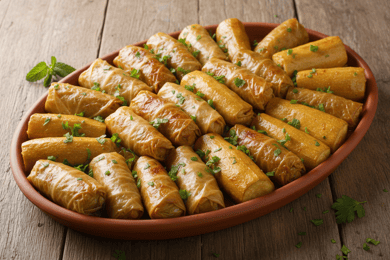
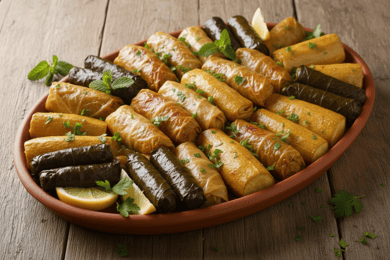
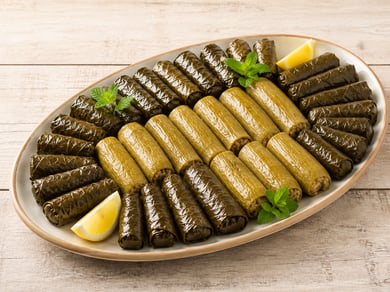
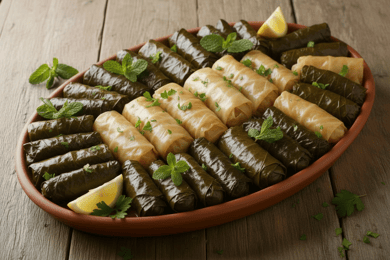
A mixed platter that pairs two Levantine mahashi, the cabbage roll beside the vine leaf roll, both wrapped around rice. Malfof, the cabbage roll, is the broad, pale, soft one: we fill it with rice worked through a cooked tomato sauce built on ground cumin and coriander, salt, white and red pepper and a trace of black, then brightened with parsley, dill and fresh coriander, so it eats savoury and warm, tomato and cumin first. Warak enab, the vine leaf roll, is the slim, dark, tightly wound one: its rice is cooked with onion and then dressed with chopped tomato, parsley, salt, a pour of olive oil and the pomegranate molasses, and more oil and molasses are poured over the rolls as they cook, so they come out glossy and sour-sweet, the molasses leading. The two sit side by side on the platter and are eaten in turns, the cabbage with a spoon and some of its sauce, the vine leaf by hand, so that neither taste covers the other. We make it for a table split between the savoury and the sour, and for anyone who wants to try both of our rolls in one order before settling on a favourite.
FromAED 11.00

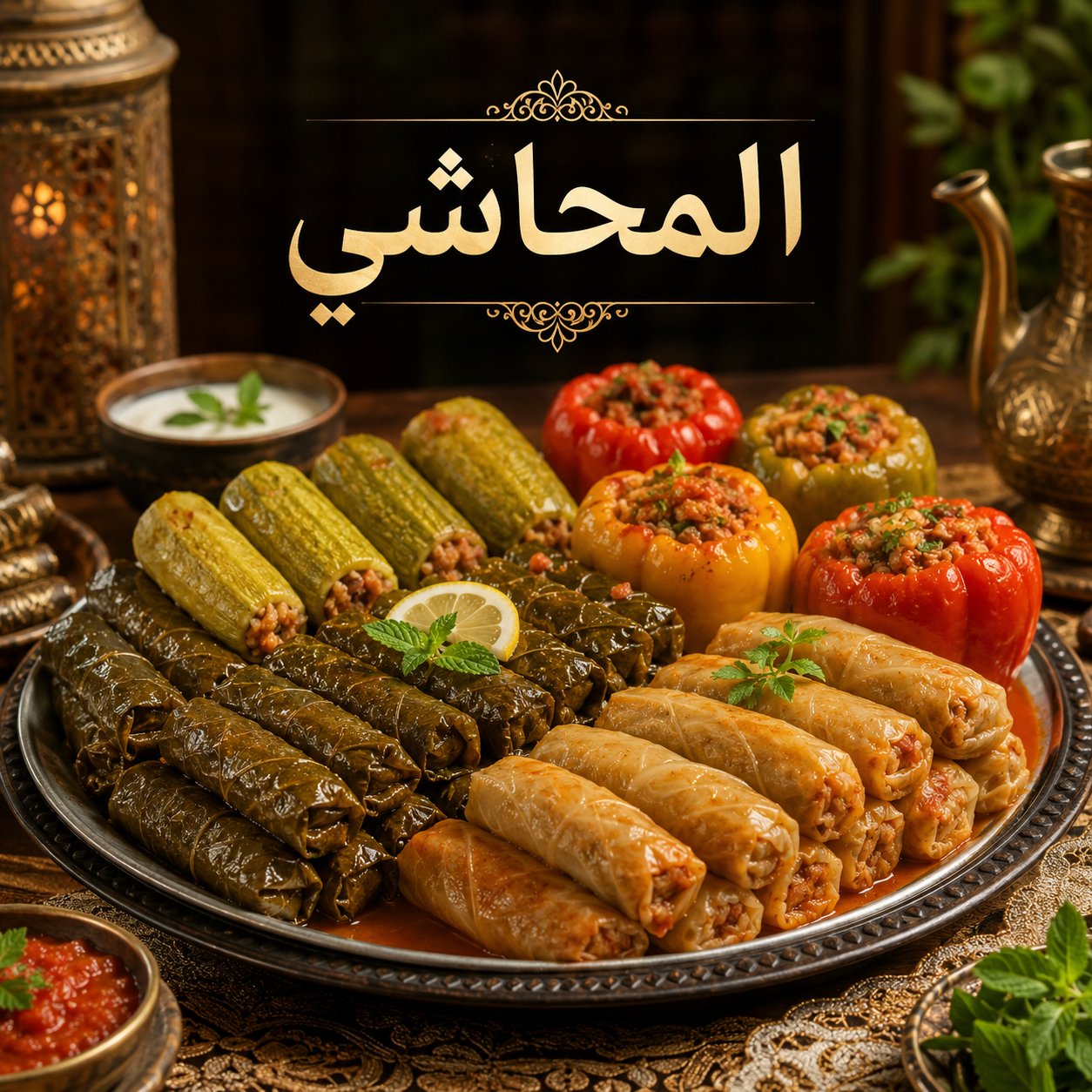
Mixed stuffed cabbage and courgettes, malfof and koosa mahshi on a single platter: two of our Levantine stuffed vegetables, cabbage leaves rolled around rice and whole cored courgettes (zucchini) filled with the same rice, under the same sauce. That filling is rice worked into a tomato sauce seasoned with ground cumin and coriander, salt, white pepper, red pepper and a light touch of black, with fresh coriander, parsley and dill through it, so every grain carries the seasoning from one end of the piece to the other; the platter arrives hot, with a tomato, cumin and salt sauce over it. One filling means one taste across the plate, and what changes is the mouthful. The cabbage leaf is thin and wound close, so a bite of a roll is mostly filling, with a soft leaf around it that gives way to the spice. The courgette is whole and tender right through, its wall having drunk the sauce around it, so it is lifted with a spoon, sauce and all, and eaten wall and filling together. It is shared from the middle of the platter, a roll for one and a courgette for another, and it is the order for a table that wants cabbage rolls and koosa together rather than as two separate dishes.
FromAED 11.00

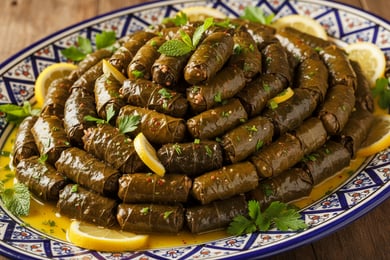
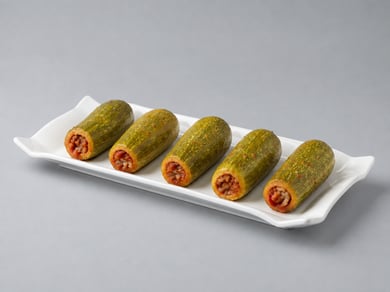
Stuffed grape leaves and zucchini on one platter, as the Syrian table serves them: whole courgettes and slender vine leaf rolls, both filled with rice, both vegetarian. The courgette is hollowed and filled with rice we have folded through a tomato sauce seasoned with ground cumin and coriander, salt, white and red pepper and a trace of black, then brightened with fresh coriander, parsley and dill; it reaches you tender, lying in a tomato sauce sharpened with cumin, and gives to the side of a spoon. The vine leaves, warak enab, are rolled finger-thin around rice cooked first with onion and then with tomato, parsley, olive oil and pomegranate molasses, so each roll is sharp with a faint sweetness, picked up with the fingers and finished in two bites. Eaten together, the sourness of the leaf comes first and the warm spice of the courgette follows, and most people alternate between them. The platter goes in the middle of the table for everyone to reach; it is the order for a table that wants both mahashi without ordering twice.
FromAED 11.00

Mixed mahashi platter: our three Levantine stuffed vegetables on one dish, cabbage rolls (malfof), whole courgettes (koosa) and vine leaf rolls (warak enab), each filled with rice, so a single platter carries two tastes. The cabbage and the courgette share one filling: rice we work through a tomato sauce we have already cooked down with cumin and coriander, both ground, with salt and a little pepper, white, red and black, then lift with chopped dill, parsley and coriander leaf, so both come out warm and savoury with tomato and cumin in front. What separates them is the bite: a cabbage leaf, rolled thin, all but disappears around its rice, while a courgette is cooked gently until its wall gives and soaks up the sauce it is served in. The vine leaf brings the other taste: we cook its rice with onion before anything else, then turn it through tomato, parsley and salt with pomegranate molasses and a good measure of olive oil, and roll it slim and firm, so the leaf comes out dark and glossy with oil, sour from the molasses with a little sweetness behind it, a sharp note between two savoury ones. That is why the platter goes to the centre of the table rather than in front of one person: whoever wants warmth takes cabbage and courgette, whoever wants sharpness takes the vine leaf, and everyone finds a piece they like.
FromAED 11.00

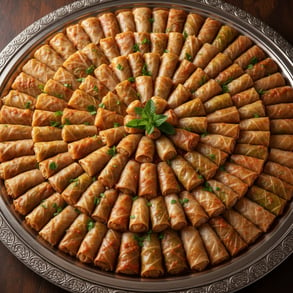
Malfof mahshi is the Levantine stuffed cabbage: cabbage leaves rolled around rice and cooked in a tomato and cumin sauce. We build the filling before anything is rolled. A tomato sauce seasoned with ground cumin, ground coriander, salt, white pepper, red pepper and a touch of black pepper is cooked down until it thickens, then the rice is worked through it until grain and sauce are one mixture, so every grain carries the seasoning on its own rather than waiting to pick it up in the pot. Coriander, parsley and dill go in last, fresh, and give the mixture its body. Each leaf is rolled around that filling, the rolls are packed into the pot, and a second sauce of tomato, cumin and salt, cooked down separately, is poured over them. The pot is sealed and left for three hours on the lowest heat, so the rolls cook in their own steam instead of at a boil; the leaf turns tender while the roll stays whole and the rice keeps its grain, and leaf and filling taste as one. It arrives hot, in the sauce it cooked in.
FromAED 11.00

Warak enab is the Levantine vine leaf roll: rice wrapped in a vine leaf and cooked slowly until the leaf is tender. Ours is filled with rice that is cooked before it is rolled. We soften onion, cook the rice on it until the grains swell, then fold in chopped tomato, parsley and salt and dress the mixture with olive oil and pomegranate molasses, so the filling goes into the leaf fully seasoned. Because the grain is already tender, each leaf can be rolled tight and holds its shape from the first minute to the last. The rolls are packed in layers, covered with water, given a second pouring of oil and molasses over the top, then sealed under the lid on the lowest flame for three hours. In that trapped steam the leaf loses its fibre, the pot liquid cooks down into the rolls, and they come out dark, glossy and firm to the bite.
FromAED 11.00

Koosa mahshi is the Levantine stuffed courgette (zucchini): whole courgettes, cored and filled with rice that has been cooked into a spiced tomato sauce and bound with fresh herbs, then left three hours on the lowest heat. We start with the sauce, not the rice. We cook tomato with ground cumin, ground coriander, salt, white pepper, red pepper and the lightest touch of black pepper until it is done, then bring the rice into it and work the two together until the grain has taken up the sauce and they are one mixture, so the filling tastes the same at the first spoon and the last. Fresh coriander, parsley and dill go in next and give the mixture its body and its scent. We fill the courgettes, pack them into the pot, cook a second sauce of tomato, cumin and salt and pour it over, then seal the lid and leave the pot on a heat too low to boil, so it cooks on its own trapped steam until each courgette is tender to the core and still whole. It is served hot in its sauce.
FromAED 11.00