What Makes Syrian Molokhia Different?
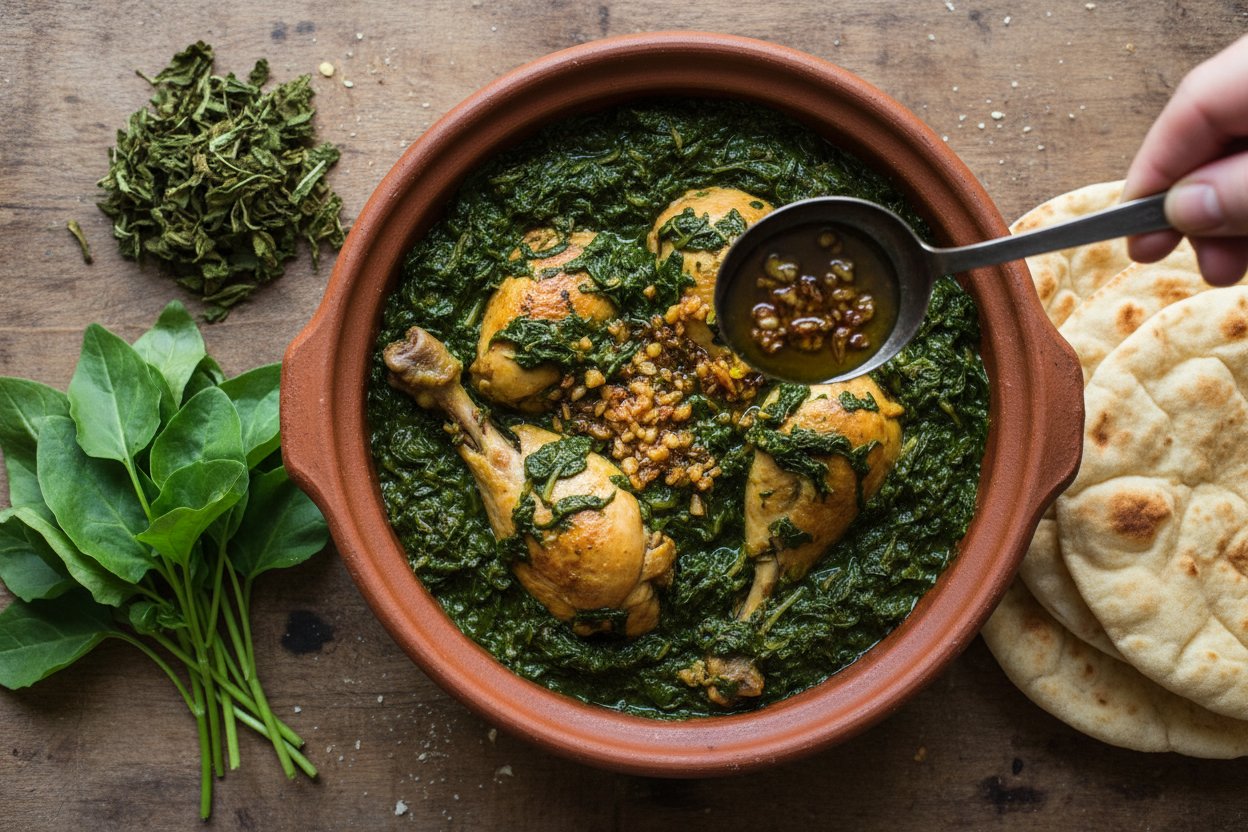
Molokhia — jute mallow — appears across the Arab world, but it is not the same dish everywhere. Egyptian molokhia is a flowing, translucent soup. Lebanese molokhia often keeps the leaves whole. Syrian molokhia, especially the Damascene version, is defined by one thing above all: the qrishla. That quick fry of ground coriander and crushed garlic in ghee, poured sizzling over the pot at the last moment, is the signature that makes the dish unmistakably Syrian.
The dish also offers a genuine choice: fresh or frozen leaves, or dried. Both are authentic; both produce a different result worth understanding before you cook.
Fresh Leaf vs Dried — What Each Gives You
Fresh or frozen molokhia leaves give a lighter, greener dish with a cleaner flavour and a shorter cooking time (15–20 minutes). This is the summer version when leaves are available.
Dried molokhia — the milled or roughly crushed form — produces a denser, more concentrated texture and a deeper, more earthy flavour. It needs soaking for fifteen minutes before use and slightly longer cooking (25–30 minutes). Many Syrian households consider it the definitive winter version.
Ingredients
- 1 whole chicken, or 6 thighs and wings
- 300 g fresh or frozen molokhia leaves (or 80 g dried)
- 1 large onion, 3 cardamom pods, 1 cinnamon stick, 2 bay leaves (for the broth)
- 1 full head of garlic (7–8 cloves), crushed
- 1 bunch fresh coriander, finely chopped (or 1 tbsp dried)
- 3 tbsp ghee
- Salt and black pepper
- To serve: plain white rice, thinly sliced onion, white vinegar, pomegranate seeds (optional)
Simmering the Chicken
Cover the chicken with cold water and add the broth aromatics. Bring to a boil, skim the foam, then reduce to low heat. Chicken takes 40 to 45 minutes. Remove and pull the meat from the bones in generous pieces — not shredded fine, but distinct pieces with texture. Strain the broth and keep it hot. The quality of this broth carries the whole dish.
Preparing the Molokhia
For fresh or frozen leaves: strip them from the thick stems. Chop with a sharp knife or pulse in a food processor — how finely you chop affects the final texture. Very fine gives a creamy consistency; coarser leaves leave more visible texture.
For dried molokhia: soak in warm water for fifteen minutes. It will swell noticeably. Squeeze gently to remove excess water before adding to the broth.
The Qrishla — The Signature That Cannot Be Skipped
In a small pan, melt the ghee over medium heat. Add the ground coriander first and stir for thirty seconds until it becomes fragrant. Then add the crushed garlic and stir briskly for thirty to sixty seconds — you want it to soften and release its aroma, not brown deeply. The moment the two hit the hot ghee together, a specific scent rises from the pan — coriander, garlic, and ghee all at once — and that is the smell of Syrian molokhia. Pour this over the molokhia while still sizzling.
Cooking in the Broth
Bring 4 to 5 cups of hot chicken broth to a boil in the pot. Add the prepared molokhia with the qrishla and stir. Reduce to a medium-low simmer. Fresh leaves: 15–20 minutes. Dried: 25–30 minutes. A gentle simmer is enough — a rolling boil breaks down the chlorophyll and yellows the dish. The finished consistency should coat the back of a spoon without being paste-like.
Serving
Ladle over plain white rice in a deep bowl, with the chicken pieces on top or alongside. The pickled onion is non-negotiable in Syrian households: thinly sliced onion steeped for ten minutes in diluted white vinegar. It cuts through the richness and adds a bright finish that makes the whole bowl come together.
Frequently Asked Questions
What is the difference between fresh leaf and dried molokhia?
Fresh or frozen leaves produce a lighter, greener dish in 15–20 minutes. Dried molokhia is denser, more concentrated in flavour, and needs soaking plus 25–30 minutes of cooking.
What is qrishla and how do I make it?
A quick fry of ground coriander and crushed garlic in ghee, poured hot over the molokhia. It is the defining technique of Syrian molokhia.
Why is pickled onion served alongside?
Its acid cuts through the richness of the molokhia and tempers the raw edge of the onion. A staple Syrian side that completes the dish.
Can I cook molokhia without chopping the leaves?
Yes — whole leaves give a different texture. Finely chopped is the Damascene standard, but whole-leaf versions are made elsewhere in the Levant.
How much chicken broth do I need for 300 g of leaves?
4 to 5 cups of broth — the molokhia dissolves into it and naturally thickens the liquid.
Ingredients
- 1 whole chicken or 6 pieces of thighs and wings
- 300 grams fresh or frozen leaf molokhia (or 80 grams dried molokhia)
- 1 large onion
- 3 cardamom pods
- 1 cinnamon stick
- 2 bay leaves
- 1 whole head of garlic (7-8 cloves), crushed
- 1 bunch fresh coriander (1 cup chopped, or half a tablespoon dried)
- 3 tablespoons ghee or vegetable oil
- Salt and black pepper
- For serving: white rice, onion cut into wedges, white vinegar, pomegranate optional
How to make it
Boil the chicken and prepare the broth
Place the chicken in a deep pot with the onion, cardamom, cinnamon, and bay leaves. Cover with cold water and turn on the heat. When it boils, skim off the foam and lower the heat. The chicken needs 40-45 minutes. Remove it and separate the meat from the bone in large pieces. Strain the broth and keep it hot.
Prepare the molokhia (leaf or dried)
For fresh or frozen leaves: separate the leaves from the stems and chop them finely with a knife or food processor. For dried: soak it in lukewarm water for 15 minutes until it swells, then squeeze it by hand. Dried gives a denser texture, leaves are lighter and greener.
Qarsha - the heart of the recipe
In a small skillet, melt the ghee over medium heat. Add the dried coriander first and stir it for thirty seconds, then add the crushed garlic. Stir quickly for 60 seconds - you will smell the reaction that distinguishes Levantine molokhia. The garlic should not brown too much, just soften and release its aroma. Pour this mixture directly over the molokhia.
Cook in the broth
In the pot, turn the heat to medium and add 4-5 cups of the strained chicken broth. When it boils, add the chopped molokhia with the qarsha. Stir and set the heat to medium-low. Leaf molokhia needs 15-20 minutes, dried 25-30 minutes. Do not boil it vigorously - a gentle simmer is enough.
Frequently Asked Questions
What is the difference between leaf molokhia and dried molokhia?
Fresh or frozen leaves are lighter and greener, needing 15-20 minutes. Dried molokhia has a denser texture and a deeper flavor, needing pre-soaking and longer cooking (25-30 minutes).
What is qarsha and how is it made?
Toasting a mixture of ground coriander and crushed garlic in ghee - poured hot over the molokhia. It is the signature that distinguishes Levantine molokhia from others.
Why is onion in vinegar served with molokhia?
Onion in vinegar balances the richness of the molokhia with a fresh acidity and softens the sharp onion. A firm Levantine tradition that completes the dish.
Can molokhia be cooked without chopping the leaves?
Yes, whole leaves give a different texture. But fine chopping is the most common standard in Damascene cooking.
How many cups of chicken broth per 300 grams of molokhia?
4 to 5 cups of broth - the molokhia dissolves into the broth and gives it a natural thickness.
Rate this article
Tap a star