What Makes Syrian Maqluba Different?
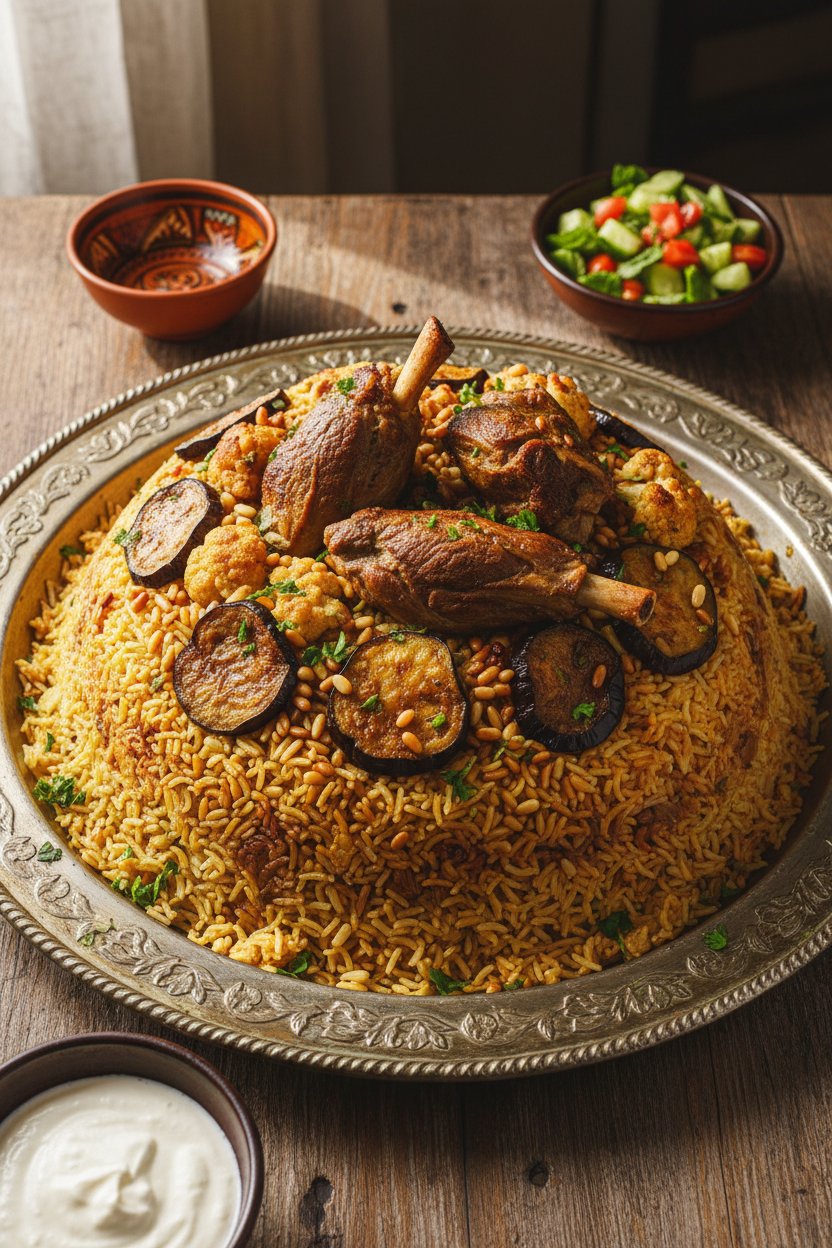
Maqluba — the name literally means 'flipped over' — is a Levantine rice dish built upside-down in the pot and then inverted onto the serving platter. The Syrian version tends to be spice-forward and typically combines both eggplant and cauliflower rather than one or the other, giving the dish a richer flavour and a more dramatic presentation once turned out.
The flip is the moment everyone holds their breath over. It is far more reliable than it looks — provided the steps leading up to it are done correctly.
Ingredients
500 g lamb mince or small cubes (or beef)
2 cups basmati or long-grain rice, rinsed and soaked
2 large eggplants, sliced into ½ cm rounds
Half a head of cauliflower, broken into medium florets
3 tomatoes, sliced into rounds
1 medium onion, finely chopped
3 garlic cloves
3.5 cups warm lamb or chicken broth
1 tsp mixed spice (baharat), ½ tsp cinnamon, ¼ tsp ground coriander
Salt and black pepper to taste
Oil for frying, olive oil for the meat
Preparing the Vegetables — Do Not Skip This Step
Salt the eggplant slices on both sides and leave them on a kitchen towel for twenty minutes. You will see moisture bead on the surface — that is exactly what you want out. Pat dry, then fry in hot oil until golden on both sides. Dry eggplant browns cleanly; wet eggplant drinks oil and steams instead.
For the cauliflower, roasting beats boiling every time. Toss the florets in a little oil, spread on a baking tray, and roast at 200°C for twenty minutes until the tips go lightly brown. The dry heat drives off moisture and creates a nutty depth that boiling simply cannot match.
Building the Layers
In the same heavy-bottomed pot you will cook the maqluba in, fry the onion in olive oil until soft and golden. Add the lamb with the spices and stir until the raw colour disappears — you are starting the browning here, not finishing the cook. Turn off the heat.
Layer order from bottom to top:
Tomato slices on the base — they prevent sticking and add a faint acidity
The browned meat directly on top
Fried eggplant layer
Roasted cauliflower layer
Rinsed, soaked rice spread evenly and gently pressed down
The Broth Ratio — The Number That Changes Everything
The reliable ratio: 1.5 to 1.75 cups of broth per cup of dry rice — less than you would use for plain rice, because the vegetables and meat release moisture as they cook. Pour the warm broth slowly down the side of the pot, never through the centre, to avoid disturbing the layers. Cook on medium until the broth comes to a boil, then reduce to the lowest heat for twenty minutes. Turn off the heat and leave the lid on for a further ten minutes — the trapped steam finishes the top layer of rice.
The Flip — One Confident Move
Choose a serving platter slightly deeper than the rim of the pot and at least as wide. Place it upside-down over the pot's opening. Using both hands — one under the platter, one gripping the pot handle — flip in a single fast, decisive motion. Do not tilt or hesitate: that is the most common cause of collapse. Hold the position for thirty seconds before slowly lifting the pot, shaking it gently if needed.
Serving
Serve immediately, scattered with toasted almonds and pine nuts. Full-fat yogurt on the side is a fixture in Syrian households. A simple green salad or cucumber-tomato salad balances the richness.
Frequently Asked Questions
Why does maqluba collapse when flipped?
Three common causes: too much broth making the rice too soft, a hesitant tilting motion instead of a fast clean flip, or wet eggplant that was not properly dried before frying. All three are preventable.
How much broth do I use per cup of rice?
1.5 to 1.75 cups — less than for plain rice, because the meat and vegetables release moisture during cooking.
Why salt the eggplant before frying?
Salting draws out excess moisture so the eggplant browns evenly rather than steaming and absorbing oil.
Do I soak the rice before making maqluba?
Yes — 20 to 30 minutes helps even cooking and prevents the bottom layer from sticking.
How do I stop the bottom from sticking?
A layer of tomato slices at the base acts as a natural barrier. A light brush of oil on the pot bottom before building also helps.
Ingredients
- 500 grams ground meat or small cubes
- 2 cups basmati or long-grain rice, rinsed
- 2 large eggplants cut into rounds
- Half a head of cauliflower, broken into florets
- 3 tomatoes cut into rounds
- 1 medium onion, chopped
- 3 cloves garlic
- 3.5 cups beef or chicken broth
- Mixed spices, cinnamon, coriander, salt, black pepper
- Oil for frying
- Olive oil for browning the meat
How to make it
Prepare the vegetables
Salt the eggplant slices and wait twenty minutes until they release their water, then dry them and fry them in hot oil until browned. The cauliflower is browned in the oven or in a pan with a little oil - the dry heat gives it a deeper taste than boiling.
Brown the meat
In the same pot in which you will cook the maqluba, brown the onion in olive oil until golden, add the meat with the spices, and stir until the color changes. Do not finish cooking - just start the initial browning.
Layer in the correct order
In a heavy-bottomed pot, start from the bottom: a layer of tomato to prevent sticking, then the browned meat, then a layer of eggplant, then the cauliflower, and finally the soaked, drained rice over everything. Press the rice gently so it fills the gaps.
Cook with the broth
Pour the hot broth slowly down the side, not from the center, so as not to disturb the layers. The broth should rise about an inch and a half above the rice. Cover and turn the heat to medium until it boils, then lower to the minimum for twenty minutes, then turn it off and keep the lid on for an additional ten minutes.
Flip onto the plate
Choose a serving plate wider than the diameter of the pot. Place it upside down over the pot, pressing in balance with both hands. Flip quickly and steadily in one motion - do not hesitate. Wait thirty seconds before slowly lifting the pot.
Frequently Asked Questions
Why does maqluba fall apart when flipped?
Three reasons: too much liquid softens the rice excessively, a hesitant tilt instead of a swift, decisive flip, or wet eggplant that was not dried. The fix: the right broth ratio and a confident flipping motion.
How many cups of broth per cup of rice in maqluba?
1.5 to 1.75 cups of broth per cup of rice - less than for plain rice, because the vegetables and meat release extra moisture.
Why do I salt the eggplant before frying?
The salt draws excess water out of the eggplant so it absorbs less oil and browns more nicely and quickly, instead of soaking up oil and turning soggy.
Should I soak the rice before maqluba?
Yes, a short soak (20-30 minutes) helps the rice cook evenly and prevents the bottom layer from sticking to the pot.
How do I keep the bottom of the maqluba from sticking?
A layer of sliced tomato at the bottom of the pot acts as a natural barrier. You can also brush the bottom of the pot with a small amount of oil before arranging.
Rate this article
Tap a star