Why Mujaddara Earns a Place at the Main Course
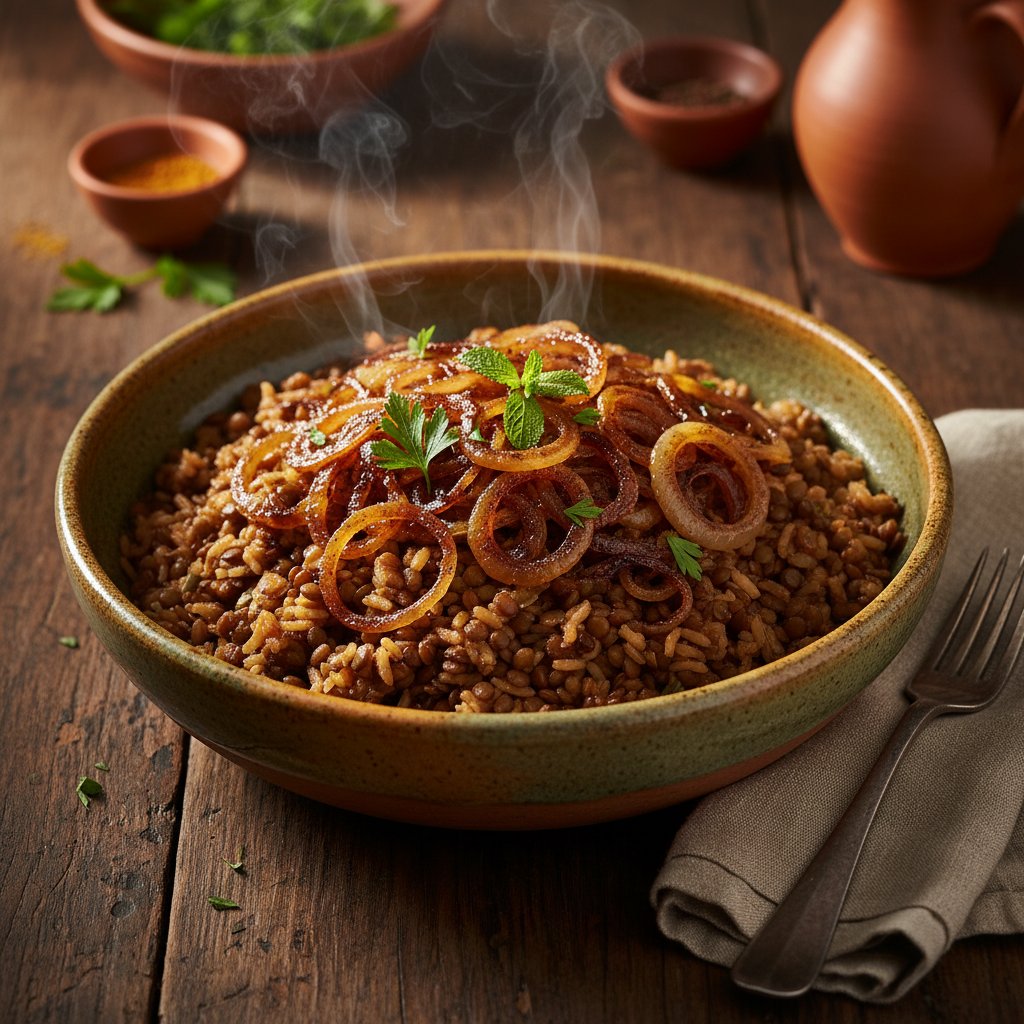
Syrian mujaddara is the dish that proves restraint is not the same as poverty. Three ingredients — brown lentils, rice or bulgur, and onion — treated with genuine attention, produce something layered and warming that keeps pulling you back for another spoonful. The lentils carry a quiet earthiness, the rice or bulgur gives body, and the caramelized onion provides a sweetness so deep you would never guess it started as something sharp and raw.
The mistake most people make is rushing the onion. Give it its full thirty minutes and the whole dish transforms.
Ingredients
- 1½ cups brown or green lentils
- 1 cup basmati or medium-grain rice (or coarse bulgur wheat for the traditional version)
- 3 large onions, thinly sliced
- ½ cup extra-virgin olive oil
- 1 tsp ground cumin
- ½ tsp mixed spice (baharat)
- ¼ tsp black pepper
- Salt to taste
- 3 cups warm water or vegetable stock
Partially Cook the Lentils First
This step matters more than it might seem. Cover the rinsed lentils with twice their volume of cold water, bring to a medium boil, and skim any foam. After fifteen minutes the lentils should be tender but holding their shape — not collapsing. Drain and set aside. Overcooked lentils turn mujaddara to mush; undercooked ones never fully absorb the spices.
The Onion — Thirty Minutes Well Spent
Pour the olive oil into a wide, heavy pan over medium heat. Add the sliced onions and resist turning the heat up. Every three or four minutes, give them a stir and watch the gradual transformation: they release water, then soften, then turn pale gold, then — if you stay patient — they become a deep amber with a caramel fragrance that fills the kitchen. The whole process takes 25–30 minutes.
Reserve two-thirds of the caramelized onion for topping. The remaining third stays in the pan and becomes part of the dish itself.
Bringing It Together
- Soak the rice in lukewarm water for 10 minutes and drain.
- Add the partially cooked lentils to the pan with the remaining onion.
- Stir in cumin, baharat, pepper, and salt.
- Add the drained rice and fold gently.
- Pour in the warm water, bring to a boil, then reduce to the lowest flame and cover.
- Cook undisturbed for 18–20 minutes.
- Remove from heat, place a folded kitchen towel under the lid, and let it rest 10 minutes — the cloth absorbs excess steam and keeps the grains separate.
The Bulgur Version
Swapping rice for coarse bulgur wheat is the older, arguably more robust version of this dish. Use the same quantity but reduce the water by a quarter cup, since bulgur absorbs liquid faster. The texture is firmer and slightly nutty — a very worthwhile variation.
Serving
Pile the mujaddara into a deep serving bowl and scatter the reserved caramelized onion on top. Alongside: cold full-fat yogurt, a simple tomato-and-herb salad dressed with olive oil and lemon, or thin cucumber pickles. The contrast between the warm, earthy bowl and the cold sharp accompaniments is one of the pleasures of Levantine home cooking.
Frequently Asked Questions
Is mujaddara a main dish or a side?
A complete main dish in Syrian cooking — the lentils provide substantial plant protein, the grains add satisfying bulk, and the dish stands on its own with yogurt and salad alongside.
Can I use red lentils instead of brown?
Red lentils disintegrate during cooking and are better suited to soups. For mujaddara you need brown or green lentils that hold their shape after partial boiling.
Why does my onion burn instead of caramelizing?
Heat that is too high cooks the surface before the sugars inside have time to develop. Medium heat, enough oil, and a full 25–30 minutes with regular stirring is the only reliable path to deep golden onion.
Rice or bulgur — which is more traditional?
Both are authentic. Bulgur is the older version and gives a firmer, nuttier texture. Rice is softer and more common today. Either works with the same process.
How long does mujaddara keep?
Up to four days refrigerated in a sealed container. To reheat, add two tablespoons of water and warm gently over low heat to restore moisture.
Ingredients
- 1.5 cups brown or green lentils
- 1 cup basmati rice or medium-grain Egyptian rice
- 3 large onions, thinly sliced
- Half a cup olive oil
- 1 teaspoon ground cumin
- Half a teaspoon mixed spices
- 1 teaspoon salt (adjusted later)
- A quarter teaspoon black pepper
- 3 cups warm water or vegetable broth
How to make it
Partially boil the lentils
Wash the lentils and place them in a pot with double their amount of cold water. Turn the heat to medium and bring to a boil. Remove the foam and lower the heat. Leave for 15 minutes until partially softened but still holding together - do not boil them fully.
Caramelize the onion
In a wide skillet over medium heat, pour the olive oil and add the onion. Stir it every few minutes. Wait a full 25-30 minutes until it turns deep golden and the caramel aroma rises. Set two-thirds aside for garnish, and leave a third in the skillet.
Assemble the dish and finish cooking
Add the partially boiled lentils to the onion skillet along with the cumin, mixed spices, pepper, and salt. Pour in the soaked rice (10 minutes), drained, then add the warm water. Bring to a boil, lower the heat, and cover the pot. Cook for 18-20 minutes until the rice absorbs all the liquid.
Rest and serve
Take the pot off the heat, place a cloth towel under the lid, and let it rest for 10 minutes. Serve it hot with the remaining caramelized onion on top, and on the side of the plate: cold yogurt, tomato salad, or pickled cucumber.
Frequently Asked Questions
Is mujaddara a main dish or a side dish?
A complete main course in Levantine cooking - the lentils provide plant protein and the onion adds depth and sweetness. It is served on its own with yogurt and salad.
Which lentils suit mujaddara: red or brown?
Brown or green lentils hold their shape and give a pleasant texture. Red lentils break down and suit soup, not mujaddara.
Why does the onion burn instead of caramelizing?
High heat burns the surface before the inside caramelizes. The key: medium heat and patience for 25-30 minutes with regular stirring.
Can the rice be replaced with bulghur?
Yes, a classic Levantine version. Coarse bulghur in the same quantity, with the water reduced slightly. The texture is firmer and more fragrant.
How long does mujaddara stay fresh in the refrigerator?
Up to 4 days in an airtight container. When reheating, add two spoonfuls of water and warm it over low heat.
Rate this article
Tap a star