The Gulf Table's Oldest Debate
At nearly every Gulf family gathering the question arises: are we making mandi or kabsa today? The answer usually depends on who speaks loudest rather than a real understanding of the difference. This comparison settles the question properly so you can choose with knowledge rather than habit.
Geographic Origin
Mandi is Yemeni in origin, specifically from Hadhramaut in southern Yemen. It spread across the Arabian Peninsula through Yemeni migrations and became one of the most beloved dishes in the region. Kabsa is unambiguously Saudi, originating in the interior of the Kingdom and now recognised as the Saudi national dish.
Spices: The Heart of the Difference
Mandi uses hawaij — cardamom, cumin, turmeric, black pepper and dried ginger — a warm but relatively gentle blend. Kabsa uses a more complex compound mix: cinnamon, cloves, cardamom, cumin, allspice and turmeric, always anchored by a tomato base. The mandi blend supports the meat; the kabsa blend competes with it in the best possible way.
Cooking Technique
Traditional mandi is cooked in a tanour — an underground stone pit dug into the earth. The meat is suspended over smouldering wood inside a sealed pit, where circulating heat and smoke create exceptional tenderness and a layered smoky flavour achievable no other way. Kabsa cooks on a stovetop in a large covered pot, which is why it is more accessible at home.
Colour and Appearance
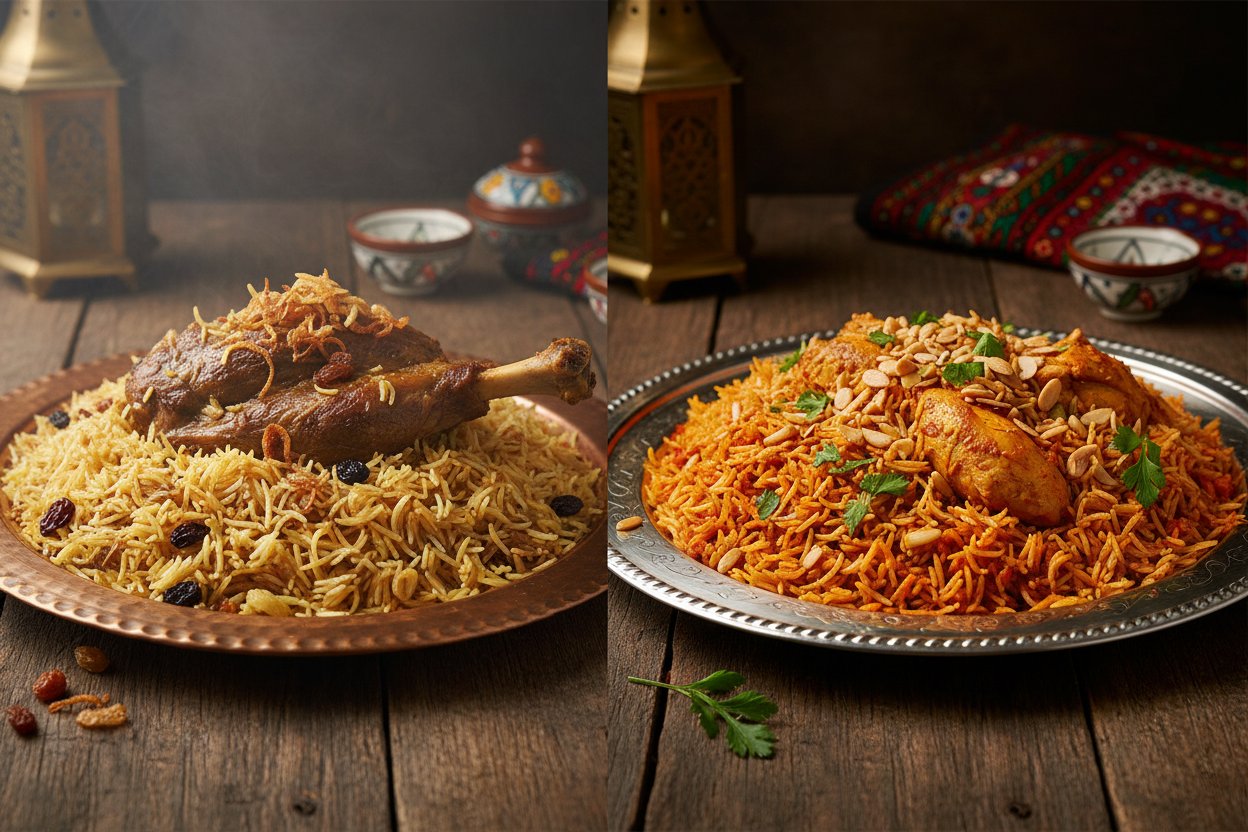
Mandi rice is pale golden, coloured primarily by saffron and the light hawaij blend. Kabsa rice is distinctly darker — orange-red from tomatoes, turmeric and warming spices. The two are recognisable from across a room.
Flavour: The Core Distinction
Mandi is lighter and more delicate: subtle smoke sits in the background of every mouthful, the spices support the meat without overpowering it, and the steam-cooking gives an exceptionally tender texture. Kabsa is richer and more complex: tomato acidity, warming compound spices and a deeply flavoured stock that permeates every grain of rice.
When to Choose Which
- Choose mandi: when you want a lighter, subtly smoky character; when serving guests who prefer gentler flavours; when you have time for a slow oven or the charcoal trick.
- Choose kabsa: when you want the deeper, more familiar Gulf flavour; for large family gatherings where a universally loved dish is the priority; when you have good ripe tomatoes and a fresh spice blend.
Accompaniments
Mandi: the classic pairing is Yemeni zhoug — a fresh green chilli and herb sauce. Kabsa: the traditional companion is dabbous — a cooked spicy tomato sauce. Both dishes are served with plain yoghurt and a green salad.
Frequently Asked Questions
What is the core difference between mandi and kabsa?
Origin, colour, spices and technique are all different. Mandi is Yemeni, lightly smoky and gentle. Kabsa is Saudi, tomato-based, deeply spiced and richly flavoured.
Which is easier to make at home?
Kabsa is generally easier — the stovetop pot method is straightforward. Mandi needs a clay oven or the charcoal-in-foil oven trick to get close to authentic.
When should I choose mandi?
When you want a lighter, subtly smoky result or are serving guests who prefer less intense flavours.
Frequently Asked Questions
What is the main difference between Mandi and Kabsa?
Mandi is Yemeni, lightly smoky with hawaij. Kabsa is Saudi, made with tomatoes and a complex blend of red spices and darker rice.
Which is easier at home?
Kabsa is easier in a pot. Mandi needs an oven pit or the charcoal trick in the oven.
When do I choose each one?
Mandi for the more delicate, smoky taste. Kabsa for the deeper flavor and large gatherings.
Rate this article
5.01 rating
Tap a star