Why This Is the Stew Syrian Home Cooks Return To
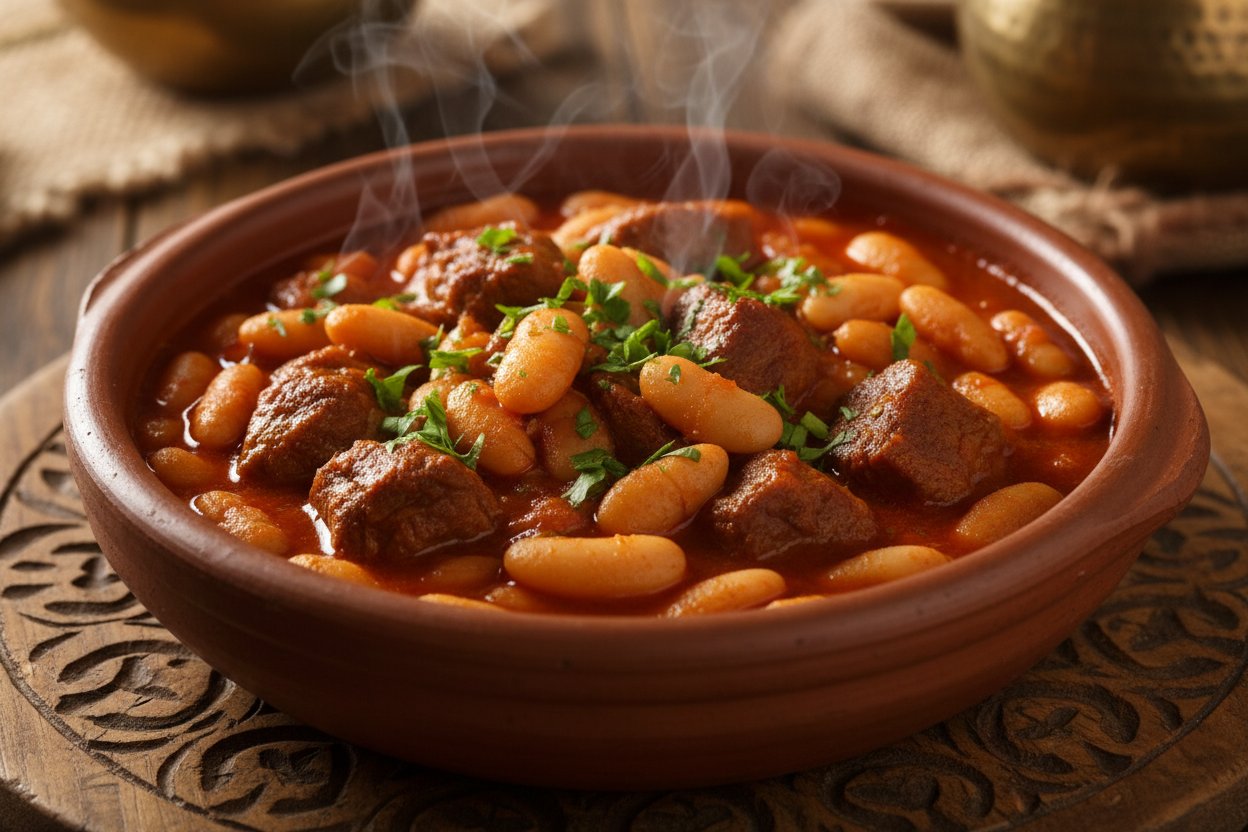
Fasoulia bil lahm — white beans braised with lamb — is the kind of dish that does not need introduction at a Syrian table. Large, creamy white beans absorb everything around them during an hour and a half of unhurried cooking: the gelatin from the lamb bones, the acidity of the tomatoes, the warmth of cinnamon and allspice. The result is a broth with genuine depth and beans that are silk-soft inside but hold their shape. Nothing like anything from a tin.
Ingredients
- 400 g large dried white beans, soaked overnight
- 600 g bone-in lamb (neck or shoulder)
- 2 large onions, diced
- 4 cloves garlic
- 3 large tomatoes, grated (or 1 cup diluted tomato paste)
- 1 tbsp tomato paste
- 2 tbsp vegetable oil or clarified butter
- 2 bay leaves
- 1 tsp mixed spice (baharat), ½ tsp cinnamon, ¼ tsp black pepper
- Salt — added only in the final third of cooking
Soak the Beans — Non-Negotiable
Large dried white beans need a full 8–12 hours in cold water before cooking. Submerge them in a deep bowl with twice their volume of water and leave overnight. They will double in size and become pliant. Drain and rinse — do not cook them in the soaking water.
Browning the Lamb — The Step That Shapes the Broth
In a heavy-bottomed pot over medium-high heat, warm the oil and brown the lamb pieces in batches without crowding. Leave each piece undisturbed for 3–4 minutes per side until genuinely browned. This is not about cooking the meat through — it is about the Maillard reaction creating flavour compounds that dissolve into the broth and give it its characteristic depth. The browned fond on the bottom of the pot is flavour.
Building the Aromatic Base
In the same pot with the same fat, cook the diced onion until soft and translucent. Add the garlic and bay leaves for one minute. Add the tomato paste and stir it into the onion for three minutes until it darkens slightly and loses its raw sharpness — this step alone noticeably improves the final broth. Add the grated tomatoes, spices, and pepper.
The Long, Slow Cook
Add the drained beans on top of the lamb. Pour over enough hot water to cover by two finger-widths. Bring to a boil and skim the surface foam, then reduce to the lowest simmer, cover, and walk away for 75–90 minutes.
Add salt only halfway through — early salt hardens the bean skins and prevents them from softening fully. This single rule is the most common mistake made with dried legumes.
How to Know When It Is Done
A bean should yield easily when pressed between thumb and forefinger — tender throughout, intact on the outside. The broth should be a rich, deep amber colour. If it seems thin, remove the lid and cook over medium heat for 10 minutes to reduce.
Serving
Serve hot alongside white vermicelli rice — spoon the broth generously over the rice. This pairing makes it a complete main course. Fresh Arabic flatbread for scooping is the traditional family-table addition.
Frequently Asked Questions
Do I really need to soak the beans overnight?
Yes. Large dried white beans soaked for at least 8 hours cook in roughly half the time and develop a better texture. Unsoaked beans can take over two hours and often cook unevenly.
Why do my beans stay hard even after long cooking?
The most common reason: salt added too early. Salt toughens the bean skin. Add it only in the final third of cooking. If you followed that rule and they are still hard, the beans may simply be too old — dried legumes older than a year often never fully soften regardless of cooking time.
Which cut of lamb works best?
Neck and shoulder are ideal — they have enough connective tissue to enrich the broth with natural gelatin as they cook. Leg of lamb is leaner and produces a thinner, less complex broth.
Can I use tinned white beans?
You can for a quicker version, but add them only in the last 20 minutes — they are already cooked and will collapse if simmered too long. The flavour will be lighter than with dried beans.
What is the traditional accompaniment?
Vermicelli rice, with the broth poured over it. The broth transforms the rice and makes the whole plate deeply satisfying. Fresh Arabic flatbread alongside for the family table.
Ingredients
- 400 grams large dried white beans (soaked overnight)
- 600 grams lamb on the bone (neck or arm)
- Two large onions cut into cubes
- 4 cloves garlic
- 3 large tomatoes, grated (or 1 cup diluted tomato paste)
- Two tablespoons vegetable oil or ghee
- 2 bay leaves
- 1 teaspoon mixed spices
- Half a teaspoon cinnamon
- A quarter teaspoon black pepper
- Salt to taste
- 1 tablespoon tomato paste (for depth)
- Enough hot water to cover the ingredients
How to make it
Brown the meat
In a heavy-bottomed pot over medium-high heat, heat the oil and brown the pieces of meat on all sides until golden brown. This step does not cook the meat through - it seals the pores and adds depth to the flavor of the broth.
Build the aromatic base
Add the onion to the same pot and stir it until softened. Add the garlic and bay leaves and cook for a minute. Add the tomato paste and stir until it browns slightly and loses its raw acidity (about 3 minutes). Add the grated tomatoes, spices, and salt.
Slow cooking
Add the drained beans over the meat and pour in hot water rising about two fingers above the ingredients. Bring the pot to a boil, skim off the foam, then lower the heat and cover the pot. Let it simmer over low heat for 75-90 minutes until the beans soften and their grains turn to a silky texture and the meat separates from the bone easily.
Finish and serve
Taste the broth and readjust the salt. If the broth is thin, remove the lid and turn the heat to medium for 10 minutes to thicken it. Serve it with white rice and vermicelli or fresh Arabic bread.
Frequently Asked Questions
Should the beans be soaked before cooking?
Yes, 8 hours or a whole night in cold water. It halves the cooking time and improves the texture.
Why do the beans stay hard?
Salt added early hardens the skin. Add it only in the last third. Or perhaps the beans are too old.
Which cuts of meat suit the stew?
Lamb neck or shank - cuts rich in collagen that give a deep, smooth broth.
Do canned beans work?
Canned beans work for speed, but add them only in the last third or they turn to mush.
What are the beans served with?
White rice with vermicelli - the broth moistens it and completes the meal. Or fresh Arabic bread.
Rate this article
5.01 rating
Tap a star