Syrian Falafel - A Street Food Equal to Shawarma
In the Levantine street food tradition, the falafel wrap holds the same standing as shawarma. Both are judged by the same standard: the crisp exterior, the tender interior, the balance between the fresh vegetables and the creamy sauce. The falafel simply proves that Levantine street food does not need meat to be a complete, satisfying meal.
But good falafel begins with one correct decision: raw soaked chickpeas, nothing else.
The Foundational Rule - Always Raw Chickpeas
This is not a matter of preference. Authentic Syrian falafel is made from dried chickpeas soaked in water for 24 hours - never cooked, never canned, never boiled. The reason is chemistry: the natural starch in raw chickpeas is what holds the mixture together without flour. Cooked chickpeas have lost that starch and become waterlogged. You will need cups of flour to bind them, and the result will be heavy, gummy balls - nothing close to real falafel.
Ingredients and Why Each Matters
- 2 cups dried chickpeas, soaked 24 hours - the base
- ½ cup fresh flat-leaf parsley - colour and freshness
- ¼ cup fresh coriander - the distinctive Syrian depth
- 5 garlic cloves - strength and aroma
- 1 medium onion - natural moisture and sweetness
- 1 tsp ground cumin - the Eastern signature
- 1 tsp ground coriander - reinforces the fresh herb
- ½ tsp red chili flakes - a controlled heat
- 1 tsp salt
- 1 tsp baking powder - the secret to lightness
- Oil for deep frying
Making the Mixture
Drain and dry the soaked chickpeas. Place them in a food processor with the fresh parsley, fresh coriander, garlic, onion, and dry spices. Pulse in short bursts rather than running continuously - the target is a coarse, sand-like texture, not a smooth paste. Stopping to scrape the sides ensures even processing. Add the baking powder and pulse once more, briefly.
Shaping and Chilling
Wet your hands slightly and shape into small flattened balls - about one heaped tablespoon each. If the mixture falls apart, add a teaspoon of flour. Refrigerate for 30 minutes before frying - this helps the falafel hold their shape in the oil.
Frying - Temperature Is Everything
Heat oil in a deep pot to 175°C. If you do not have a thermometer, dip the handle of a wooden spoon in the oil - immediate bubbles around it means the oil is ready. Lower the falafel gently and leave them completely undisturbed for two minutes while the crust sets. Then turn carefully until they are deep golden brown, about 3-4 minutes total. Drain on kitchen paper immediately.
Building the Wrap
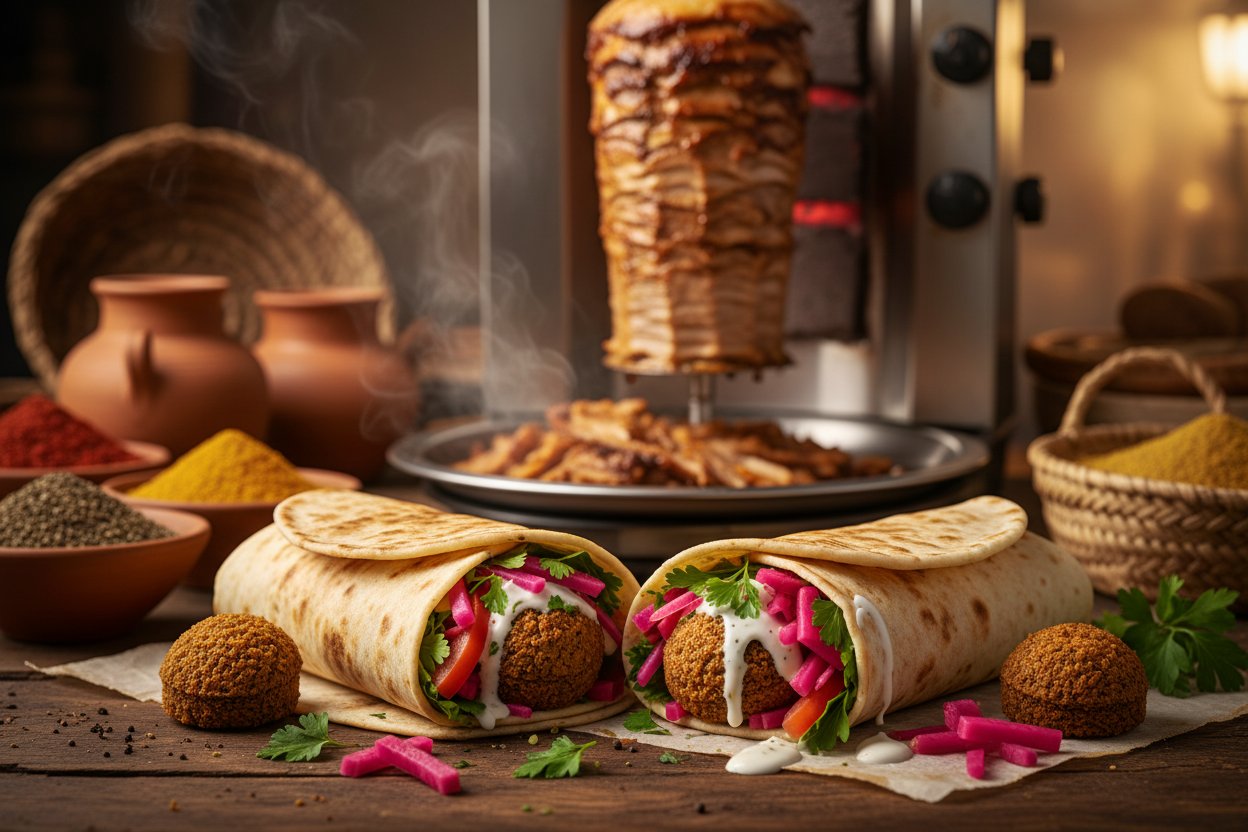
Lay the flatbread open and spread tahini sauce generously over the inside. Place 3-4 hot falafel in the centre and press them gently to reveal the vivid green interior - this releases the herb scent and signals freshness to whoever is eating. Add sliced tomatoes, fresh lettuce leaves, pickled turnip strips (the tang is essential to balance), and green chili if you like. Roll firmly and eat immediately - falafel loses its crispness within minutes.
Frequently Asked Questions
Why cannot I use canned chickpeas for falafel?
Canned chickpeas are cooked and wet, and have lost the natural starch that holds falafel together. Using them requires large amounts of flour, producing heavy and gummy results far from authentic falafel.
How long should chickpeas soak for falafel?
At least 24 hours in ample cold water. The chickpeas should roughly double in size - this hydration is what gives the finished falafel their light interior.
What gives falafel its green interior?
Fresh parsley and fresh coriander. That green colour is the quality mark of authentic Syrian falafel. White or grey inside means insufficient herbs or the use of canned chickpeas.
What is the ideal oil temperature for frying falafel?
175-180°C. Below that, falafel absorbs too much oil and becomes greasy. Above that, the outside burns before the inside cooks through. A wooden spoon handle with immediate bubbles around it is a reliable substitute for a thermometer.
Ingredients
- 2 cups dried chickpeas soaked in water for 24 hours
- Half a cup chopped fresh parsley
- A quarter cup chopped fresh cilantro
- 5 cloves garlic
- 1 medium onion, chopped
- 1 teaspoon cumin
- 1 teaspoon ground coriander
- Half a teaspoon red pepper
- 1 teaspoon salt
- 1 teaspoon baking powder
- Oil for frying
- Arabic bread or samoun
- Tahini, tomatoes, parsley, pickled turnip, lettuce, hot pepper
How to make it
Prepare the falafel mixture
Drain the soaked chickpeas well. Place them in the food processor with the parsley, cilantro, garlic, onion, and spices. Grind until you get a coarse, cohesive mixture - not smooth like a paste. Add the baking powder and blend one last time.
Shaping
Shape small flattened balls with your hands. If the mixture falls apart, add a spoonful of flour. Chill the balls in the refrigerator for 30 minutes before frying.
Frying
Heat the oil to 175 degrees. Fry the falafel for 3-4 minutes until it turns dark golden brown. Do not disturb them for the first two minutes. Drain them on kitchen paper.
Assemble the wrap
Spread out the bread and spread it with tahini. Place 3-4 hot falafel pieces and crush them a little so the lovely green inside shows. Add the tomatoes, lettuce, pickles, and hot pepper.
Frequently Asked Questions
Why can't canned chickpeas be used in falafel?
Canned chickpeas are cooked, wet, and have lost their starch. Falafel needs this starch to hold together. Raw soaked chickpeas are the only correct raw material.
How many hours do chickpeas soak for falafel?
24 hours in plenty of cold water. The chickpeas should roughly double in size.
What gives falafel its green color on the inside?
Fresh parsley and cilantro. This color is a mark of quality - falafel that is white inside means insufficient herbs or canned chickpeas.
What is the ideal oil temperature for frying falafel?
175-180 degrees. Lower, and the falafel absorbs oil and becomes greasy. Higher, and it burns on the outside before the inside cooks.
Rate this article
Tap a star